Welcome to diabetes health. Online
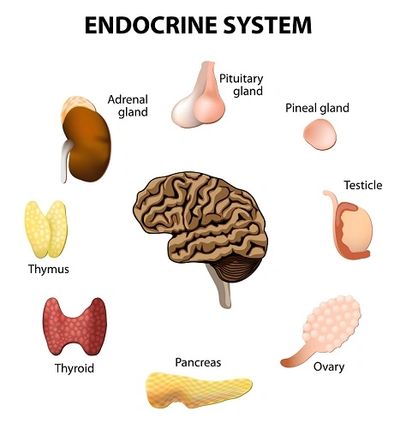
Endocrine system
The endocrine system includes many organs and glands which manage creating and releasing hormones that maintain a myriad of bodily functions and keep our bodies healthy. Each gland requires different nutrients to perform their function. Diabetes either effects or is effected by hormones created by each gland. Hormones are chemicals that coordinate functions in your body by carrying messages through your blood to your organs, muscles and other tissues. These signals tell your body what to do and when to do it.
Members of the Endocrine system
The pineal gland, hypothalamus, pituitary gland, adrenal glands, thyroid gland, gonads, parathyroid glands, Thymus, pancreas, heart and kidneys all have a part to play in the endocrine system. Each gland or organ secretes hormones that function synergistically with others to provide a healthy state of being.
What hormone is created in which gland
The pineal gland secretes melatonin which begins the sleep cycle. it works synergistically with the pancreas to keep the wake sleep cycle and the feed fast cycle in synch.
The Hypothalamus gland controls the operation of the endocrine system glands by stimulating or inhibiting their functions.
The pituitary gland consists of two parts; it receives signals from the hypothalamus and either produces hormones that affect organ processes or can directly affect a specific organ.
Adrenal glands consist of 2 layers the cortex and the Medulla. Each part provides for the creation of several different hormones that control a wide variety of system functions.
The Thyroid gland's primary function is to control the speed of the body’s metabolism. The thyroid produces and secretes 4 different hormones. Thyroxine (T4), Triiodothyronine(T3), reverse Triiodothyronine and calcitonin.
The Gonads are either the testes or ovaries depending on whether you are a male or female. Both produce different hormones that directly affect the ability to conceive a child.
The Parathyroid glands produce parathyroid hormone (PTH), which helps regulate vitamin D and calcium levels in the body. This helps to maintain Bone density, muscle movement and cellular signal transmission.
Thymus is part of your endocrine system but works closely with your lymphatic system. The bone marrow creates lymphocytes and then sends them to the thymus where they mature into functional T-cells. T-cells undergo a process called positive selection and negative selection.
The Pancreas Is actually part of the endocrine and exocrine systems. It produces hormones that help regulate blood sugar levels (insulin) and appetite, stimulate stomach acids, and tell the stomach when to empty.
The Heart as part of the endocrine system produces 2 hormones. Atrial natriuretic peptide (ANP) and brain natriuretic peptide (BNP). Both Hormone help regulate blood pressure and volume, as well as food intake and glucose and lipid homeostasis.
The Kidneys as part of the endocrine system, produce the hormones, Renin, Erythropoietin (EPO), Calcitriol, Thrombopoietin (TPO), Dopamine, prostaglandins, endothelins, adrenomedullin. All of these hormones regulate different functions in the body.
How does Diabetes affect hormone creation?
The pineal gland as shown by patients taking part in a study of circadian misalignment it is reported to have shown highly irregular production of glucose and insulin. Reduced melatonin levels are linked to the origination and development of type 2 diabetes.
Hypothalamus The hypothalamus regulates glucose balance by controlling the activity of the autonomic nervous system and the release of hormones such as ghrelin, insulin, and glucagon which are all closely related to obesity and diabetes2.
The pituitary gland The pituitary gland could potentially produce too much growth hormone (GH) if Blood sugar is not monitored and controlled properly.
Adrenal glands In patients with diabetes, the adrenal glands can become enlarged due to the hyperactivation of the HPA axis. The HPA axis is a communication system between the hypothalamus, pituitary glands, and adrenal glands. The HPA axis responds to stimuli that threatens homeostasis, either psychologically or physically. It releases hormones like cortisol.
The Thyroid gland Diabetes and thyroid dysfunction are closely intertwined because both are endocrine system disorders. Thyroid dysfunction whether it is hypothyroidism or hyperthyroidism can exacerbate t2dm and insulin resistance.
The Gonads Diabetes can significantly impact the function of the gonads (testes in males, ovaries in females), leading to hormonal imbalances and potential reproductive issues due to disruptions in the hypothalamic-pituitary-gonadal axis, where high blood sugar levels from diabetes can impair the production and regulation of sex hormones like testosterone and estrogen, causing problems like erectile dysfunction, irregular menstrual cycles, and decreased fertility in both genders.
The Parathyroid glands Research suggests the correlation between diabetes and the parathyroid glands is quite significant. Low vitamin D levels can lead to increased parathyroid hormone (PTH) production. High PTH levels can lead to increased intracellular calcium levels. Increased calcium interferes with insulin signaling pathways thus causing cells to become less responsive to insulin, leading to insulin resistance in effect diabetes type 2.
Thymus Diabetes 1 is an autoimmune disease. Overactive T cells which get released from the thymus due to dysfunction of the thymus gland are referred to as autoreactive T cells. These t-cells attack and destroy the beta cells of the islets of Langerhans where Insulin is created in the pancreas. This leads to the development of diabetes 1.
The Pancreas The pancreas plays a significant role in diabetes as it produces insulin, a hormone essential for regulating blood sugar levels; when the pancreas does not produce enough insulin or the body cannot use insulin effectively, it leads to diabetes, causing abnormally high blood sugar levels.
The Heart Studies have shown that both ANP and BNP are reduced in people with diabetes, insulin resistance and obesity. Both ANP and BNP have receptors in the adipose tissue, they enhance lipolysis which is the breakdown of fat that is stored in the body for use in energy production, heat and insulation.
The Kidneys Diabetes is the leading cause of chronic kidney disease (CKD) in the United States. High blood sugar can cause high blood pressure, damage to blood vessels and nephrons which can lead to CKD.
Nutrients necessary for hormone production
The pineal gland needs Vitamin A, Tryptophan, Vitamin B9 (folate), Vitamin B6 (pyridoxine), Vitamin B5 (Pantothenic Acid), zinc, magnesium, B12(cobalamin), omega 3 fatty acid and Alpha-linolenic acid to keep the pineal gland healthy and able to produce melatonin.
Hypothalamus Nutrients necessary for the hypothalamus to modulate ghrelin, insulin and glucagon are polyphenols, omega-3, alpha-linolenic acid, vitamin C, vitamin B1, and vitamin B12.
Pituitary gland Nutrients necessary for the pituitary gland to stay in homeostasis are antioxidants, polyphenols, omega 3 fatty acids, Vitamin C (ascorbic acid), and B12 (Cobalamin).
Adrenal glands Nutrients necessary for the adrenal glands to remain in homeostasis are Vitamin C, Vitamin E, Vitamin B5, Vitamin B6, Vitamin B12, Magnesium and zinc.
Thyroid gland The nutrients necessary to keep the Thyroid gland in homeostasis and to create t3 and t4 hormones in the thyroid are iodine, iron, Zinc, copper, vitamin D and Selenium. A Nutrient to take in moderate amounts is Vitamin A (retinol).
Gonads Nutrients necessary for the testes to create testosterone, FSH, Lh and GnRH are Vitamins D, zinc and Magnesium. Nutrients necessary for the ovaries to produce estrogen, progesterone and androgen are Vitamin A (retinol), Vitamin C (ascorbic acid), B6, B2, B12, vitamin D, calcium, magnesium, zinc, selenium, iron, and boron.
Parathyroid glands Nutrients necessary for the parathyroid to remain in homeostasis are Calcium and Vitamin D (calciferol).
Thymus Nutrients necessary For the Thymus to remain healthy are vitamin B6, Vitamin D, vitamin C, and zinc.
Pancreas For the Pancreas to produce insulin protein, (particularly those food items high in the content of the amino acids leucine, arginine, alanine, isoleucine, and lysine), Vitamins A, B1, B2, B6, B7 C, D, E, zinc, calcium, magnesium, Omega 3 fatty acid and alpha-linolenic acid.
Heart The Nutrient necessary for the production of ANP and BNP is protein.
Kidneys Electrolytes and protein are the necessary nutrients to keep the kidneys healthy and able to perform its main function and that is filtering the blood and removing liquid waste from it. Sodium, potassium, calcium, and phosphorus are the most vital electrolytes for this purpose. However, it should be noted that a careful balance can be achieved through diet and that balance is key to homeostasis.