Welcome to diabetes health. Online
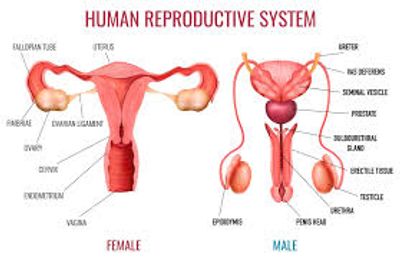
Reproductive system
The reproductive organs of both males and females, while they have different purposes, secrete hormones that keep the body healthy and work together to produce an embryo with the sperm from a male and an egg from a female. Thus, keeping our species from going extinct.
The female reproductive system
The female reproductive system is located in the pelvic region of a woman and is a very complex system. It is a very important part of the human anatomy in that the hormonal secretions help keep the human body in homeostasis.
Internal organs
Uterus
The uterus receives a fertilized egg and protects the fetus (baby) while it grows and develops. The uterus contracts to push the baby out of the body during birth.
Ovaries
The ovaries are located in the lower left and right quadrants of the abdomen, one on each side of the uterus.The ovaries produce estrogen, progesterone, and androgens, which are important for female traits like breast development, body shape, and body hair. These hormones also play a role in the menstrual cycle, fertility, and pregnancy. The ovaries store and release eggs for fertilization.
Fallopian tubes
The fallopian tubes are not quite connected to the ovaries. Fimbriae are finger-like projections at the ends of the fallopian tubes sweep eggs from the ovaries into the tubes.
Mesosalpinx is a piece of tissue that connects the fallopian tubes to the uterus. Peritoneal fluid is fluid produced by the fimbriae that transports the egg to the uterus.
External organs
Vulva
The vulva is a general term used to describe all parts of the external female reproductive system.
Mons pubis
The mons pubis (mons veneris), main purpose is to provide cushioning to protect the pubic bones during sexual intercourse.
Labia majora
The labia majora forms the folds that cover the labia minora, clitoris, vulva vestibule, vestibular bulbs, Bartholin's glands, Skene's glands, urethra, and the vaginal opening.
Labia minora
The labia minor are a pair of small cutaneous folds that begins at the clitoris and extends downward.
Clitoris
The clitoris is a sex organ in females that functions as a sensory organ.
Hymen
The distal opening of the vagina is usually partially covered by a membrane called the hymen.
Vaginal opening
The vagina is an elastic; muscular tube connected to the cervix proximally and extends to the external surface through the vulva vestibule.
Urethra
The urethra is an extension of a tube from the bladder to the outside of the body. The purpose of the urethra is for the excretion of urine.
vulva vestibule
The area between the labia minora is the vulva vestibule.
vestibular bulbs
The vestibule bulbs are two bulbs of erectile tissue that starts close to the inferior side of the body of the clitoris.
Bartholin's glands
The Bartholin's glands also known as the greater vestibular glands are two pea-sized glands located slightly lateral and posterior to the vagina opening.
Skene's glands
The Skene's glands, which are also known as the lesser vestibular glands, are two glands located on either side of the urethra.
How does diabetes affect the female reproductive system
Diabetes can impact the female reproductive system in several ways. Women with diabetes may experience irregular or absent periods, or premature menopause. Diabetes can make it harder for women to get pregnant, and may increase the risk of miscarriage and stillbirth. The hormonal and metabolic processes that regulate blood sugar levels can disrupt the production and carrying of eggs. Other factors that can make it harder for people with diabetes to conceive include obesity, being underweight, and having polycystic ovary syndrome (PCOS).
Nutrients necessary to keep the female reproductive system in homeostasis
Nutrients necessary to keep the female reproductive system in homeostasis are Vitamin B9 (folate), iron, zinc, vitamin B12, selenium, omega-3 fatty acids (particularly DHA), protein, Vitamin D (calciferol), Vitamin E (Tocopherol), Vitamin C (ascorbic acid), Iodine and Carotenoids.
The male reproductive system
The male reproductive systems internal components lie within the pelvic region near the bladder. Those components include the seminal vesicles, Cowper's gland, prostate gland, Epididymis, vas deferens and urethra. The external components include the penis, testes and the scrotum. Your fertility and sexual traits depend on the normal functioning of your reproductive system, as well as hormones released from the brain. Quite like the female reproductive system the bladder and urethra are inextricably intertwined with the reproductive organs. As with the female reproductive system our species depends on the reproductive system.
Internal components
Cowper's gland (aka bulbourethral glands)
The Cowper's glands are pea sized glands present inferior to the prostate gland in the male reproductive system and are embedded in skeletal muscle. They are made up of tubules, acini, and a network of small ducts.
prostate gland
The prostate gland is a gland in the male reproductive system. The prostate surrounds the part of the urethra (the tube that empties the bladder) just below the bladder.
Epididymis
The epididymis is an essential part of the male reproductive system. It is a coiled tube located at the back of each testicle that stores sperm until they are mature and then transports sperm to the
Vas deferens
The vas deferens, also known as the sperm duct or ductus deferens, is a muscular tube that moves sperm from the epididymis to the urethra during ejaculation.
Urethra
The urethra is a duct that passes through the prostate into the penis and carries urine from the bladder so that it may be excreted from the body.
Seminal vesicles
The seminal vesicles (aka seminal glands or vesicular glands) are a pair of glands in the male reproductive system that produce fluids that become part of semen and are located in the pelvis area, near the urinary bladder.
External components
Penis
The penis is the male organ used for urination and sexual intercourse. The penis is located above the scrotum.
Testes
The testes are male sex glands that have both an endocrine and exocrine function. The testes are oval-shaped reproductive structures that are found in the scrotum and separated by the scrotal septum.
Scrotum
The scrotum is made up of two layers: the skin and the tunica dartos. The tunica dartos, also known as the dartos muscle, is a thin layer of smooth muscle that's part of the scrotum and plays a key role in regulating the temperature of the testes.
Diabetes effect on the male reproductive system
Men with diabetes are more likely to experience erectile dysfunction, or the inability to get or maintain an erection. Diabetes can cause decreased sperm count, concentration, and motility, as well as reduced semen volume. Diabetes can cause lower testosterone levels, which can affect sex drive, erection, and ejaculation. The hormonal and metabolic processes that regulate blood sugar levels can disrupt the production and carrying of sperm. Other factors that can make it harder for people with diabetes to conceive include obesity or being underweight.
Nutrients necessary for male reproductive system homeostasis
Nutrients necessary for male reproductive system homeostasis are vitamin E, zinc, selenium, folate, vitamin A, vitamin C, omega-3 fatty acids (EPA and DHA), alpha-linolenic acid, calcium, magnesium, and vitamin B12.